 ISSN: 1885-8031
https://dx.doi.org/10.5209/REVE.84397
¿El capital humano, el capital social y la participación de la junta directiva afectan el desempeño de la cooperativa? El caso del Programa Desa Lestari
Mokhtaruddin Buang[1] ,
Asnarulkhadi Abu Samah[2],
Mohd Roslan Rosnon[3]
y Nik Ahmad Sufian Burhan[4]
,
Asnarulkhadi Abu Samah[2],
Mohd Roslan Rosnon[3]
y Nik Ahmad Sufian Burhan[4]
Recibido: 16 de julio de 2021 / Aceptado: 28 de junio de 2022 / Publicado: 20 de enero de 2023
Resumen. El gobierno de Malasia ha implementado una serie de programas de desarrollo comunitario, y este esfuerzo ha continuado con la introducción del Programa Desa Lestari. El programa Desa Lestari es la iniciativa de desarrollo comunitario más reciente del gobierno, que enfatiza la cooperación como una estrategia de desarrollo comunitario. Dada la posición de las cooperativas como fuerza impulsora detrás de esta iniciativa, es importante que la investigación actual examine el desempeño cooperativo, que depende de la capacidad de la junta para cumplir eficazmente sus funciones. Se han postulado varios factores relacionados con el directorio, y este estudio se ha centrado en los roles de provisión de recursos de los miembros del directorio derivados del capital humano y social, con la inclusión de una función de mediación de la participación del directorio. Este estudio adopta un enfoque de investigación cuantitativa utilizando un diseño de investigación de correlación. Aplicando un método de muestreo estratificado proporcionado, se recopilaron datos de cuestionarios distribuidos en línea y por correo. Luego se analizaron los datos de 226 respuestas elegibles de 38 cooperativas. Para analizar los datos se utilizó un enfoque de Modelado de ecuaciones estructurales de mínimos cuadrados parciales (PLS-SEM). En general, el desempeño de las cooperativas en el Programa Desa Lestari resultó ser moderado, con la mayoría de las cooperativas (ƒ = 21) con un desempeño de promedio a un nivel muy satisfactorio (51% y más). Curiosamente, a pesar de los altos niveles de capital humano y capital social de los encuestados en el estudio actual, los hallazgos revelaron que estos factores no tenían ningún impacto en el desempeño cooperativo, lo que a su vez influye en el papel mediador de la participación de la junta. Este estudio, sin embargo, sirve como investigación prospectiva, ya que es el primero en integrar la teoría de la dependencia de recursos y la teoría de la participación en la investigación de la efectividad de los miembros de la junta en el desempeño de las cooperativas, especialmente en el contexto de Malasia.
Palabras clave: Junta cooperativa; Teoría de la dependencia de recursos; Teoría de la participación; Desarrollo comunitario; Programa Desa Lestari.
Claves Econlit: P13; L30; Y10.
[en] Does the board's human capital, social capital and participation affect co-operative performance? The case of Program Desa Lestari
Abstract. The Malaysian government has implemented a number of community development programmes, and this effort has been continued with the introduction of Program Desa Lestari. Program Desa Lestari is the government's most recent community development initiative, emphasising co-operative as a community development strategy. Given the co-operatives' position as the driving force behind this initiative, it is important that the current research examine co-operative performance, which is reliant on the board's ability to effectively fulfil their roles. Several board-related factors have been postulated, and this study has focused on the provision roles of board members' resources derived from human and social capital, with the inclusion of a mediation function of board participation. This study adopts a quantitative research approach using a correlation research design. Applying a proportional stratified sampling method, data were gathered from questionnaires distributed online and postal. The data from 226 eligible responses from 38 co-operatives were then analysed. A Partial Least Squares Structural Equation Modeling (PLS-SEM) approach was used to analyse the data. Overall, co-operative performance in Program Desa Lestari was found to be moderate, with most co-operatives (ƒ=21) performing at an average to a very satisfactory level (51% and above). Interestingly, despite respondents' high levels of human capital and social capital in the current study, the findings revealed that these factors had no impact on co-operative performance, which in turn influences the mediating role of board participation. This study, however, serves as prospective research as it is the first to integrate the resource dependence theory and participation theory in investigating the effectiveness of board members on co-operatives performance especially in the context of Malaysia.
Keywords: Co-operative Board; Resource Dependence Theory; Participation Theory; Community Development; Program Desa Lestari.
Summary. 1. Introduction. 2. Underpinning Theories and conceptual framework. 3. Literature Review and Hypotheses. 4. Methodology. 5. Data Analysis. 6. Discussion of Finding. 7. Conclusion. 8. References.
How to cite. Buang, M., Samah, A.A., Rosnon, M.R. & Burhan, N.A.S. (2023). Does the board's human capital, social capital and participation affect co-operative performance? The case of Program Desa Lestari. REVESCO. Revista de Estudios Cooperativos, 1(143), e84397. https://dx.doi.org/10.5209/reve.84397.
Since Malaysia's independence in 1957, the government has implemented several initiatives to cater to and improve the rural community's economic and social well-being. Program Desa Lestari was the most recent of the government's community development programmes aimed at encouraging people to stay in rural areas by offering economic opportunities (Prime Minister’s Department, 2013). Through this initiative, the co-operative has been promoted as a strategy for community development.
The International Co-operative Alliance (ICA) has recognised the essential role of co-operatives as a community development strategy, where community interest (Majee & Hoyt, 2011) is one of the fundamental principles adopted in 1995 to acknowledge the relation between co-operatives and community development (Wilkinson & Quarter, 1996). The co-operative, according to Majee & Hoyt (2011), allowed the community to participate, taking control, and hold accountable to improve their well-being, and this vehicle enables them to be more community oriented (Zeuli & Radel, 2005), hence as a strategy for community development (Brown, 1997). As co-operatives play an important role in Program Desa Lestari, the board's ability to successfully fulfil their roles as the "experts" in charge (Cornforth, 2004) is essential in justifying the platform's viability as proven by its performance.
Prior scholars reviewed various factors affecting the effectiveness of the co-operative boards and most of them focused on investigating the impact of board composition, board characteristics, board structure and board process (Buang & Abu Samah, 2020) that contribute to the performance. According to Daily, Dalton, & Cannella (2003), any advance in board effectiveness analysis needs to explore new fields of study and one of the perspectives that can be taken into consideration is the resource provision role of the board (Johnson, Daily, & Ellstrand, 1996). Pfeffer & Salancik's (1978) seminal work proposed that the role of directors in resource provision is to provide the organisation with different resources regarding any features, skills, or advantages that may be deemed useful for the operations of the company.
This concept was adopted by Hillman & Dalziel (2003) and board capital was introduced as the key antecedent of the board's resource provision derived from the resource dependency principle (Pfeffer & Salancik, 1978), which included human and social capital. In the context of corporate literature, there have been a number of studies attempting to examine the board's provision role that leads to the organisation’s performance (e.g. Haynes & Hillman, 2010; Hillman & Dalziel, 2003; Jermias & Gani, 2014; Pérez-Calero et al., 2016; Zona, Gomez-Mejia, & Withers, 2018). This hypothesis, however, has yet to be tested, particularly from a co-operative perspective, to examine the effectiveness of board members in contributing to co-operative performance.
In addition, from our perspective, providing key resources does not ensure that the board functions effectively without the active participation of the board members in the co-operative governance. Even though several studies have demonstrated the importance of participation in co-operative governance, the action of participation was mirrored in the attendance of members at Annual General Meetings (AGM) and the support of members for the products or services of their co-operatives (e.g., ‘Aini et al., 2012; Hafizah Hammad Ahmad Khan, Mahazril’ Aini Yaacob, Hussin Abdullah, & Siti Hajar Abu Bakar Ah, 2016; Sushila Devi Rajaratnam et al., 2010). On the other hand, Fiegener (2005) emphasised the significance of investigating board participation behaviour, particularly in the firm's strategic decision-making process, which influences firm performance indirectly (Judge & Zeithaml, 1992). Subsequently, present study suggested that board participation as a mediating factor in the relationship between human capital and social capital with co-operative performance within the research model since the degree of board participation is affected by its resources (Judge and Zeithaml, 1992), i.e., the human capital and social capital of the board members (Johnson, Schnatterly, & Hill, 2013).
2. Underpinning Theories and conceptual framework
Through the introduction of resource dependence theory, Pfeffer & Salancik (1978) spawned one of the most well-known theories in corporate governance in describing the role of the board in providing resources. Previous research in the literature on resource dependence indicated that human capital emerged from Becker's (1975) work, which referred to the director's knowledge, skills, and abilities (Crook, Todd, Combs, Woehr & Ketchen, 2011; Khanna, Jones & Boivie, 2014; Nicholson, 2004) as a result of their educational investment and previous experiences (Becker, 1993; Kor & Sundaramurthy, 2009; Lester, Hillman, Zardkoohi, & Cannella, 2008; Minichilli & Hansen, 2007; Pugliese & Wenstop, 2007). Furthermore, according to Becker (1964;1975), human capital can be divided into two types: general and specific human capital.
General human capital is defined as a set of knowledge and skills to execute generic tasks (Vourvachaki, Slobodyan, & Jerbashian, 2015) that can be used in a diverse settings (Rauch & Rijsdijk, 2013). The level of education via structures of learning and knowledge (Khanna et al., 2014) is often employed as a metric linked with general human capital (Bruderl, Preisendorfer, & Ziegler, 1992). According to Wincent, Anokhin, & Boter (2009), board members with diverse educational backgrounds (Pugliese & Wenstop, 2007) are better able to identify creative solutions that facilitate effective decision-making, which indirectly serves their roles in providing resources to the boardroom (Pérez-Calero, Villegas, & Barroso, 2016). Besides that, Khanna et al. (2014) found that the board's general human capital was generated from their current and previous professional experience, including as a member of the board (Pérez-Calero et al., 2016). Having board members with professional experience demonstrates excellent human capital implicitly (Bailey & Helfat, 2003; Carpenter & Westphal, 2001; Certo, 2003) since it affects their thought, frame of reference, and expectations (Kor & Sundaramurthy, 2009; Westphal & Fredrickson, 2001).
Furthermore, the board enhanced its human capital competencies as a result of a specific human capital (Bruderl et al., 1992; Cooper, Gimeno-Gascon, & Woo, 1994; Khanna et al., 2014; Kor & Sundaramurthy, 2009; Rauch & Rijsdijk, 2013; Vourvachaki et al., 2015). Specific human capital, according to Vourvachaki et al. (2015), is a set of skills that allow the execution of highly specialised activities and is only useful in professions that need skills comparable to the present one (Gathmann & Schönberg, 2007). Specific human capital indicators, including such industry-specific experience reflecting experience in similar industries (Colombo & Grilli, 2005; Cooper et al., 1994), and entrepreneur-specific human capital referring to self-employment and leadership experience in which the board's management knowledge was developed (Rauch & Rijsdijk, 2013), were identified by Bruderl et al. (1992). These attributes enable the development of specific skills as well as tacit or procedural understanding of how boards, firms, and industry’s function (Becker, 1993; Nahapiet & Ghoshal, 1998). As a result, integrating these human capital elements to examine the effectiveness of co-operative board members would make a significant contribution to the co-operative's performance.
Apart from human capital, economists have adopted the term social capital to describe its impact on economic outcomes (Hayami, 2009). The most prominent social capital network approach used in relation to organisational performance (Claridge, 2018) is Granovetter's (1973) seminal work on embeddedness and derived from this line, Nahapiet & Ghoshal (1998), defined social capital as the sum of actual and potential resources contained within, accessible through, and generated by an individual's network of interactions. To better understand the impact of social capital on board effectiveness, Adler & Kwon (2002) and Kim & Cannella (2008) proposed categorising social capital into two types: external and internal social capital, as each category contributes different resources to the board.
External social capital is defined as the extent to which a board member interacts with the external environment through bridging and linking (Kim & Cannella, 2008; Lee et al., 2016; Pérez-Calero et al., 2016), which includes shareholders, customers, distributors, legal authorities, and politicians (Kim, 2005). Similarly, in the co-operative setting, bridging social capital refers to relationships with other members of the co-operative board (Yu & Nilsson, 2018), while linking refers to the inter-organisational networks in which a co-operative is engaged (Liang, Huang, Lu, & Wang, 2015). Since organisations are not closed entities, their survival is mainly dependent on the capacity of board members to draw useful resources from the environment (Pfeffer & Salancik, 1978) in order to adjust to external contingencies (Wincent et al., 2009). As a result, in this research, the bridging and linking of board members with the numerous external organisations was suggested to examine the effectiveness of the board in fulfilling its role.
Internal social capital, on the other hand, comprises of the ties and relations inside the board of directors (Kim & Cannella, 2008), which contribute to the board's cohesiveness (Forbes & Milliken, 1999) via organisational bonding to achieve its shared goals (Lee et al., 2016). According to Pérez-Calero et al. (2016), the board's ability to operate as a group is the consequence of bonding social capital, which strengthens trust within the board, improving the efficacy of cooperation and communication inside the boardroom (Kim & Cannella, 2008). Thus, interpersonal ties between members will be incorporated in this proposed model as an indication to describe the board's internal social capital, which would eventually lead to cooperative performance.
Meanwhile, in the current study, co-operative performance was proposed as the dependent variable, which according to Zahra & Pearce (1989), resource dependence scholars referred to as performance comprising financial, systematic, and social components as suggested by the legalistic perspective in determining a company's performance. Based on these criteria, it corresponds to the explanation of co-operative performance evaluation, which includes both financial and non-financial indicators, as demonstrated in previous studies (Benos, Kalogeras, Wetzels, de Ruyter, & Pennings, 2018; Giacomini, Chiaf, & Mazzoleni, 2017; Mayo, 2011).
Correspondingly, since co-operative structures are associated with community development initiatives, Cohen & Uphoff's (1977) participation theory of community development was incorporated into this proposed model to analyse board member participation. Participation, according to Cohen & Uphoff (1977), is defined as a process in which a number of individuals are involved in programme decision-making and implementation, as well as participation in evaluation activities where individual voluntary and democratic participation is required (Nikkhah & Redzuan, 2009). Following that, this theory provides a framework for describing three aspects of participation that address the following questions: (1) ‘What' types of participation occur, (2) ‘Who' participates in them, and (3) ‘How' the process of participation occurs (Cohen & Uphoff, 1980). As this study focused on board members' participation in strategic decision-making, the discussion focuses on the 'What' dimension, which can be operationalised into four quantifiable dimensions, namely planning, implementation, benefit sharing, and monitoring and evaluation (Abu Samah & Fariborz, 2011; Cohen & Uphoff, 1980). Nonetheless, because of the conflict between its practicality (Sheikh, 2015) and the passive form of participation (Cohen & Uphoff, 1977), the benefit participation aspect was omitted.
Following that, a conceptual framework was developed in this study to examine the role of resource provision as well as the participation of co-operative board members in order to assess its influence on co-operative performance in Program Desa Lestari, as represented in Figure 1. The research framework illustrates the positions of the exogenous and endogenous variables, as well as board participation as a mediating variable between those variables. The positions of these constructs are consistent with the inquiries proposed earlier through the research objectives.
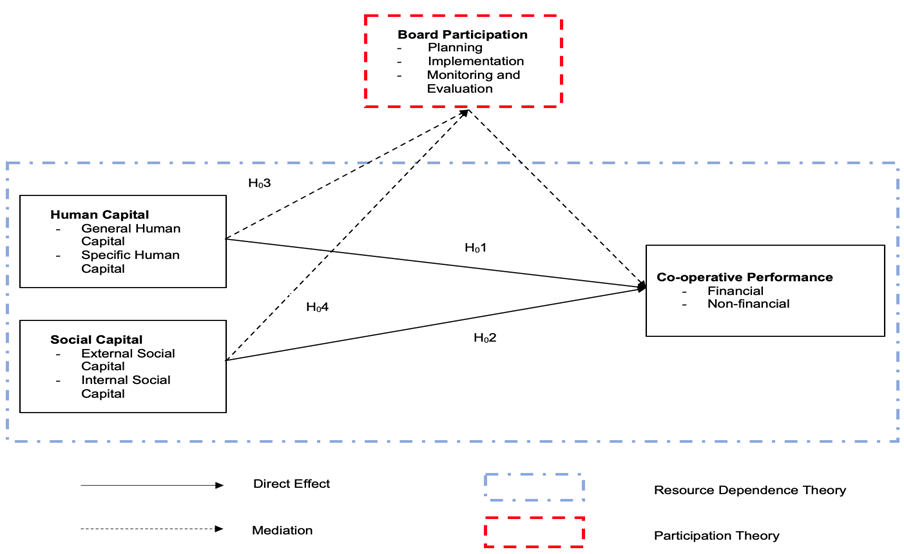 |
Figure. 1. Conceptual Framework.
3. Literature review and Hypotheses
3.1. Co-operative performance measurement
As demonstrated in previous studies, the performance measurement of co-operatives is broader than the conventional firm (Hind, 1999) that integrated the social and business purpose (Spear, Cornforth, & Aiken, 2009). The measurement of the performance also depends on the constitution, aims, identity, principles and values of the co-operative (Abdul Aris, Madah Marzuki, Othman, Abdul Rahman, & Hj Ismail, 2018; Mayo, 2011; Soboh, Lansink, Giesen, & van Dijk, 2009), which is difficult to be measured as compared to other forms of enterprise. Moreover, the interdisciplinary features between co-operatives and non-profit organisations (Valentinov & Iliopoulos, 2013) and between co-operatives and social enterprises (Borzaga, Depedri, & Tortia, 2011) have indirectly influenced the design, implementation and application of quantifiable metrics to measure their performance (Sushila Devi Rajaratnam, Nurizah Nordin, Mohd Shahron Anuar Said, Rafedah Juhan, & Farahaini Mohd Hanif, 2009).
As stated, the resource dependence perspective defines performance measurement as a combination of financial, systematic, and social components that are all consistent with existing co-operative performance evaluation practises. Initially, the empirical literature on co-operative performance based mainly as an independent business entity (Benos et al., 2018) where according to Fabio Ribas Chaddad (2006), the co-operative performance measurements was measured and compared to investor-owned firms (IOFs). In this setting, co-operative performance is often assessed using the available financial accounting metrics (Soboh et al., 2009) based on the secondary data consists of four types of accounting ratios, i.e. profitability ratio, liquidity ratio, indebtedness ratio and wealth evaluation. These ratios are commonly used in the estimation of the financial performance of different organisational settings (Nooraslinda Abdul Aris et al., 2015) which can also be used to assess the performance of co-operatives in various economic sectors (Sushila Devi Rajaratnam et al., 2009).
The present study, on the other hand, recognised the dual nature of a co-operative organisational structure, which should incorporate members and social benefits (Benos et al., 2018; Franken & Cook, 2015; Hind, 1999; Soboh et al., 2009) in addition to conventional corporate success survival criteria. Since financial measurements alone are not rigorous (Duguid, 2017) and incomplete without assessing non-financial variables (Marie, Ibrahim, & Al Nasser, 2014), there is a growing interest in determining co-operative performance beyond the economic bottom line. As a result, it is suggested that systematic and social components be incorporated in the evaluation of co-operative performance. Systematic performance refers to the firm's sustainability and growth (Kyriakopoulos, Meulenberg, & Nilsson, 2004), which in the case of co-operatives is referred to as membership growth. Social performance, on the other hand, refers to an organisation's reaction to changing social standards (Duguid, 2017) and, from a co-operative perspective, it relates to members' interests, caring for others, and the community's overall well-being (Kyazze, Nkote, & Wakaisuka-Isingoma, 2017).
3.2. Human capital and co-operative performance
As previously stated, human capital can be divided into general and specific human capital (Becker, 1964), and Rauch & Rijsdijk (2013) discovered that both components had an effect on business performance with varying results. In their study of external directors, Khanna et al., (2014) found that general human capital is a source of competitive advantage since such skills acquired from formal education and previous experience allow them to do their job more successfully (Carpenter & Westphal, 2001). Furthermore, Bruderl et al. (1992) discovered in their research that the founders' years of education and years of work experience are linked to high survival rates and growth for a newly established business venture, which is corroborated by Cooper et al. (1994) and Dahlqvist et al. (2000). This is due to the fact that general human capital is the foundation for developing the board's abilities, which facilitate efficient decision-making (Pérez-Calero et al., 2016), lead to greater cognitive ability (Carpenter & Westphal, 2001), and higher productivity (Dahlqvist et al., 2000), and contribute to the company's governance effectiveness (Reeb & Zhao, 2009). Meanwhile, a limited number of studies in the context of co-operatives investigated the factor of general human capital of the board affecting co-operative performance, but the results were inconsistent (Abolfazl Rahmatizadeh, Hossein Barani, Ahmad Abedi Sarvestani, & Amir Mozafar Amini, 2016; Azadi, Hosseininia, Zarafshani, Heydari, & Witlox, 2010; Hakelius, 2018).
Meanwhile in their research, Crook et al. (2011) discovered that the correlation between specific human capital and firm performance is greater which is in line with a meta-analysis conducted by Unger et al. (2011) as it is difficult to trade or exchange (Chi, 1994) relative to general human capital (Coff, 1997). Similarly, a research conducted by Chen (2014) and Dalziel et al. (2011) found that the industry-specific experience of directors has a positive influence on research and development (R&D) investment in order to develop innovative capabilities that indirectly affect the performance of the company. From the co-operative perspective, Abolfazl Rahmatizadeh et al. (2016) and Azadi et al. (2010) found that the technical knowledge and skills of the members of the board were the most critical factors contributing to the co-operative performance of the Iranian co-operative due to their relevance to specific tasks (Rauch & Rijsdijk, 2013), particularly in the field of agriculture. In addition, in the context of Swedish co-operative, Hakelius (2018) in her research on the farmer co-operative board described the director’s industry-specific experience in terms of knowledge of the activities, structure and understanding of the co-operative business form contributes to high performing co-operatives. According to Chareonwongsak (2017), it is necessary for the members of the co-operative board to strengthen their specific knowledge and skills in order to boost their competitive advantage, as it is a good predictor of future performance (Cooper et al., 1994).
Consequently, based on the empirical review alluded to above, the present researcher proposes to analyse the human capital indicator, which comprises both general and specific human capital, to examine the effectiveness of the board which contributes to the performance of the co-operative. This leads to the postulates that:
H1: There is a significant relationship between human capital and co-operative performance.
3.2. Social capital and co-operative performance
In corporate studies, social capital has been investigated in relation to various organisational outcomes, including firm performance (Kor & Sundaramurthy, 2009; Pérez-Calero et al., 2016), firm’s R&D investment (Chen, 2014; Dalziel et al., 2011), strategic change (Haynes & Hillman, 2010), CEO selection (Tian, Haleblian, & Rajagopalan, 2011), firm’s CSR disclosure (Ramón-Llorens, García-Meca, and Pucheta-Martínez, 2018), board tasks (Melkumov and Khoreva, 2015) and innovative performance (Kim and Kim, 2015; Wincent et al., 2010), and can be addressed on the basis of external and internal social capital.
Empirical evidence of the benefits of external networks is available in recent study, and as stated, the main purpose of external social capital is to bridge and link the firm to the external environment (Pérez-Calero et al., 2016). In evaluating the performance of 117 non-financial publicly traded firms in the Korea Composite Stock Price Index market, Lee et al. (2016) found that firm growth is dependent on the bridging position of individual board members, as it provides the organisation with useful information (Dalton, Daily, Ellstrand, and Johnson, 1998; Liang et al., 2015) to reduce business volatility (Lee, Choi, and Kim, 2012). Furthermore, Tian et al. (2011) discovered that stock market investors responded favourably to the selection of CEOs with demonstrated management connections to other company boards in a sample of 208 new CEO appointment events in U.S. manufacturing, indicating the importance of bridging.
Besides that, Pérez-Calero et al. (2016) discovered the importance of linking the business via the director's interlock with important stakeholders or other relevant institutions that significantly influence the company's performance, which is consistent with previous research (Burt, 1980; Hillman, Keim, and Luce, 2001; Kim & Cannella, 2008). Similarly, Lester et al. (2008) reported that appointing an ex-government official as an external director benefits the organisation because of the relationship they made as former government officials (Hillman, Cannella, and Paetzold, 2000). In the co-operative setting, Hafizah Hammad Ahmad Khan et al. (2016) found a strong relationship between external social capital and performance, which is similar with the findings of Yaacob, Hammad Ahmad Khan Zuraini Yaacob, and Hussin (2014). They claimed that connections between the co-operative and other entities, such as the government, suppliers, and consumers, should be maintained to guarantee the co-operative's existence and to promote its economic operations.
Meanwhile, a number of empirical studies have investigated the organisational impact of internal social capital (e.g., Barroso-Castro, Villegas-Periñan, and Casillas-Bueno, 2016; Kim & Cannella, 2007; Lee et al., 2016; Tian et al., 2011) in the form of ties between board members that add internal solidarity to the board and facilitate the pursuit of common objectives (Adler and Kwon, 2002). Kim (2005) guided by Coleman's (1990) social capital theory, discovered in her study using data from the Korea Listed Companies Association from 1990 to 1999 that the density of the board network, referring to the extensiveness or cohesiveness of interaction between board members, resulted in an improvement in company performance. Furthermore, Tian et al. (2011) utilised co-working experience to assess internal social capital, which has a favourable influence on group task effectiveness (Littlepage, Robison, and Reddington, 1997) and improves company performance as it fosters bonding (Adler and Kwon, 2002). Using the same predictor, Barroso-Castro et al. (2016) discovered that board co-working experience had a significant effect on in-board engagement (Kim & Cannella, 2008; Stevenson and Radin, 2009), which is supported by Pérez-Calero et al. (2016), that impact on the firm performance. Nevertheless, Lee et al. (2016) showed that boards with strong internal social capital had a negative impact on company performance because groups with high bonding may limit the board's ability to operate effectively (Sato, 2013). Internal social capital, on the other hand, has yet to be investigated from a co-operative perspective in the previous research. Inclusion of internal social capital as an input in assessing board effectiveness is therefore regarded as an investigation of new areas, particularly in the context of the Malaysian co-operative. The social capital of co-operative board members in this study was examined via interaction, which included bonding, bridging, and linking. Hence, the study proposes that:
H2: There is a significant relationship between social capital and co-operative performance.
3.3. Mediating effect of board participation
In this study, board participation was proposed as a mediating factor in the relationship between human and social capital and co-operative performance. This is because possessing essential resources does not guarantee that the board will function effectively without the active participation of its members. This is supported by Fiegener (2005), who mentioned that the involvement of the board as a unit in strategic decision-making, rather than the individual director, would influence the organization's long-term performance (Judge and Zeithaml, 1992). In a similar vein, Solange Charas (2015) made a point of saying that when a board works as a collective entity, it influences the firm's decision-making and enhances the coordination of operations via the utilisation of various resources to generate value for the organisation (Huse, Hoskisson, Zattoni, and Viganò, 2011).
According to Judge and Zeithaml (1992), the degree of board involvement is affected by its resources, which are described as the board members' human and social capital by Johnson, Schnatterly, and Hill (2013). Pugliese and Wenstop (2007) highlighted that knowledge is one of the competencies obtained by the board through structured learning (Khanna et al., 2014) that provides greater capacity for board members to process information (Wiersema and Bantel, 1992) to perform multiple tasks (Forbes & Milliken, 1999; Hillman and Dalziel, 2003) that indirectly affect board members' active participation. Additionally, the general human capital coming from prior experience's knowledge and skills (Pérez-Calero et al., 2016) improved board members' capacity to engage in the board as it influences the board's thinking, frame of reference, and expectations (Kor & Sundaramurthy, 2009; Westphal and Fredrickson, 2001).
Besides that, a firm's in-depth knowledge of the industry, competitors, consumers, and technologies, referred to as industry-specific knowledge, will mitigate the board's inactive behaviour (Pugliese and Wenstop, 2007), as it will assist the board in effectively understanding business operations and internal management issues (Forbes & Milliken, 1999). Meanwhile, in the co-operative context, knowledge of the operations, structure, and understanding of the co-operative business model (Hakelius, 2018) is a component of specific human capital that indirectly promotes the active participation of board members because they speak in a similar 'language.'
Additionally, the extent to which board members interacted with outsiders via their external connections (Kim, 2005) played an important impact in enhancing board involvement. According to Kim & Cannella (2008), the board's external social capital is a source of competitive advantage for a firm, and another benefit is the experience gained by board members from their external network, which allows them to engage more actively in the boardroom (Hillman and Dalziel, 2003; Kor & Sundaramurthy, 2009; Tian et al., 2011). Similarly, the importance of external social capital has been demonstrated in the co-operative setting (e.g., Liang et al., 2015; Yu & Nilsson, 2018), where connections between the co-operative and other inter-organisational networks would benefit the co-operative by disseminating valuable information in the boardroom, which implicitly fosters board member participation.
Apart from that, board participation is influenced by the board members' internal social capital (Kim & Cannella, 2008), which leads to the board's cohesion (Forbes & Milliken, 1999) in accomplishing its shared objectives via organisational bonding (Lee et al., 2016). Westphal's (1999) research was a pioneer in recognising the importance of social ties within the board, and the ties that exist between board members foster familiarity and confidence (Forbes & Milliken, 1999), which allows for the exchange of information and collaboration within the board (Kim & Cannella, 2008) and enables the board to function as a group and conduct its functions in a way that has a positive impact on firm performance (Pérez-Calero et al., 2016). Furthermore, Pérez-Calero et al. (2016) asserted that the boardroom's unity and integration are created through trust derived from social similarity (Ruef, Aldrich, and Carter, 2003), which allows board members to work together and make decisions as a team (Finkelstein and Mooney, 2003; Stevenson and Radin, 2009; Westphal, 1999). Since the co-operative is locally owned and controlled (Zeuli, Freshwater, Markley, and Barkley, 2004), the same idea often existed, encouraging engagement among co-operative board members.
Therefore, the current study would like to propose board participation, using the concept of Cohen & Uphoff's (1977) as it corresponds to participation in the strategic decision-making process, as a factor that mediates the relationship between human capital and social capital with co-operative performance in Program Desa Lestari. The present study would, therefore, like to propose that:
H3: Board participation mediate the relationship between human capital and co-operative performance in Program Desa Lestari.
H4: Board participation mediate the relationship between social capital and co-operative performance in Program Desa Lestari.
4. Methodology
4.1. Measurement properties
The data for this study were collected
using a self-administered questionnaire split into five sections. Section
A had open-ended questions regarding the respondents' socio-demographic
profile, such as age, as well as questions about the co-operative's profile,
such as the year of registration and length of holding the position, which was
assessed on a continuous scale. After processing all of the collected data, the
data was divided into categories such as  30,
31-40, 41-50, 51-60, 61-70 and
30,
31-40, 41-50, 51-60, 61-70 and  71
for the respondents' ages. Closed-ended questions, on the other hand, were
asked to identify respondent personal and co-operative information. A nominal
scale has been used in this section. Respondents were required to choose an
answer from a list of options, and these questions were scored categorically.
Gender, religion, and ethnicity are examples of inquiries.
71
for the respondents' ages. Closed-ended questions, on the other hand, were
asked to identify respondent personal and co-operative information. A nominal
scale has been used in this section. Respondents were required to choose an
answer from a list of options, and these questions were scored categorically.
Gender, religion, and ethnicity are examples of inquiries.
Eleventh statements have been framed in Section B to examine the construct of human capital encompassing general and specific human capital. The items in this present study were developed by adapting prior research questions (‘Aini et al., 2012; Bruderl et al., 1992; Hafizah Hammad Ahmad Khan et al., 2016; Huat, 2010; Rauch & Rijsdijk, 2013; Tanriverdi, Konana, and Ge, 2007). In addition, 18 statements in section C were developed to examine respondents' external and internal social capital. Items adapted from Fredette and Bradshaw (2012), Goo, Kishore, Rao, and Nam (2009), Kim & Cannella (2008), Leana and Pil (2006), (Ng and Feldman (2010), Sheikh (2015), Subramaniam and Youndt (2005), Sun, Fang, Lim, and Straub (2012) and Tony Liston Hutagalung (2016) were used to assess social capital.
Furthermore, in assessing the mediating factor of board participation in the current research, the three-dimensional construct of 18 items was adapted from the study done by Rilwanu (2014) and Sheikh (2015), which comprises of board participation in planning, implementation, monitoring, and evaluation. Each item for this construct was assessed in section D using a 6-point Likert scale ranging from 1 (Strongly Disagree) to 6 (Strongly Agree.
In section E, the financial and non-financial indicators were used to measure co-operative performance as the dependent variable in this study were mostly adopted and adapted from the Malaysia Co-operative Societies Commission (MCSC) existing index and adjusted from indicators developed by the Cooperative Development Authority of the Republic of the Philippines. Return on asset, net profit margin, current ratio, quick ratio, debt ratio, and net tangible asset were used to analyse financial performance. The average financial ratio will be used to measure co-operative financial performance in the current research as this approach is consistent with the standard used by MCSC, namely Co-operative Industrial Average (Suruhanjaya Koperasi Malaysia, 2017), and is also similar to a study conducted by Shamsuddin, Ghafar Ismail, Mahmood, and Abdullah (2017). The financial ratios were assessed using a three-point Likert scale of 1 (weak), 2 (fair), and 3 (good), as recommended by MCSC during the expert's validity assessment. The researcher then converted the overall score to 60% using MCSC’s standard weighting (Suruhanjaya Koperasi Malaysia, 2017) and rated it on a 5-point Likert scale: (Weak), 2 (Fair), 3 (Satisfy), 4 (Very Satisfy) and 5 (Excellent).
Meanwhile, for the non-financial items, participants were asked to rate whether they agreed or disagreed with the statements using a nominal scale of two points: 0 (No) or 1 (Yes). Apart from that, other information from the co-operative's record was gathered and analysed in this section, including the number of co-operative board meetings, the number of co-operative employees, the dividends paid, the growth in membership, and the shareholder fund. Following that, the assessment is structured according to the co-operative's non-financial component, which covers systematic and social elements including co-operative administration and management, service and welfare of members, co-operative human capital development, economic and employment opportunities, and adherence to the co-operative's principles. The cumulative score for each component contributes to 40% of the total measure of co-operative performance based on the MCSC standard weighting. Finally, the total non-financial scores were evaluated on the same 5-point Likert scale as financial metrics, i.e., 1 (Weak), 2 (Fair), 3 (Satisfy), 4 (Very Satisfy), and 5 (Excellent).
Finally, the total score from both metrics was calculated to represent overall co-operative performance, which was ranked using Cheuk's (2012) performance rating system: "Very Satisfactory," "Satisfactory," "Average," "Unsatisfactory," and "Very Unsatisfactory", guided by the marking score used by the Cooperative Development Authority of the Republic of the Philippines.
4.2. Content validity and reliability
Since the study items have been adopted and adapted from various sources of existing instruments, experts are therefore required to evaluate the validity of the measurement items' content (Zamanzadeh et al., 2015). Lawshe (1975) recommended that the expert panel include at least four members, while Lynn (1986) said that more than ten were probably superfluous. As a result, 5 experts were assigned to verify the scale's content. The utilisation of an expert panel provides constructive input on the consistency of the newly developed measure as well as defined criteria for assessing each item (Rubio, Berg-Weger, Tebb, Lee, and Rauch, 2003). Hence, in order to meet the purpose, the content validity of the instrument must be evaluated by experts with research or fieldwork experience (Davis, 1992; Zamanzadeh et al., 2015). In the context of this research, experts from academia and industry were invited to serve as panellists, including representatives from Malaysia Co-operative Societies Commission (MCSC), Malaysian Co-operative Institute (MCI), Ministry of Rural Development (MRD), and Open University Malaysia (OUM).
The agreement between panels for each item was calculated using Lawshe's (1975) Content Validity Ratio (CVR) model and the mean value utilised by Allahyari, Hassanzadeh, Khosravi, and Zayeri (2011). As a result, 83 items were retained based on this approach. Finally, the Content Validity Index (CVI) was employed to evaluate the content validity of the final items, as recommended by Lynn (1986). The CVI score for each item was calculated by the number of experts who evaluated it as valid content (Tojib and Sugianto, 2006), and in this research, the valid content rating is scored as 2 or 3. Subsequently, the 83 items with a minimal content validity were assessed, and the CVI score was 1, indicating that the items' validity is high. This result is consistent with Lynn's (1986) proposal that for a panel of five or fewer experts, all must agree on the content validity where the CVI value should be 1. A pilot test was conducted with 30 respondents to evaluate its reliability (Creswell, 2012), and all items were found to meet the pilot test requirements, with Cronbach's alpha values ranging from 0.746 to 0.931, which is higher than DeVellis’s (2003) threshold value of 0.700.
4.3. Sampling method and data collection
Program Desa Lestari, as stated, was the most current of the government's community development programmes aimed at encouraging people to stay in rural areas by providing economic possibilities via the implementation of economic initiatives. Under this programme, the government aims to promote the development of potential sectors other than those that have traditionally existed in rural areas, notably agriculture and fisheries, via the co-operative platform. Over an eight-year period, the government has spent a total of RM147.4 million on this programme, which has included a total of 128 co-operatives across the country.
In the context of this study, the population from which a sample is drawn (Saunders, Lewis, and Thornhill, 2019) includes the board members of the micro cluster co-operatives in the Program Desa Lestari that were established between 2013 and 2015. This is owing to the lack of data available to evaluate the co-operative's financial performance, since the analysis is based on financial data spanning three years, which, according to Robbins and Coulter (2005) and Yaacob et al. (2014), is enough for examining performance. Additionally, according to MCSC, a co-operative can be classified as active or inactive and dormant (Suruhanjaya Koperasi Malaysia, 2010). An inactive co-operative is one that has not carried out any activity for three years but nevertheless has an annual general meeting or has its accounts audited throughout that period. Meanwhile, a dormant co-operative is one that has no operations, no annual general meetings, and whose finances have not been audited for more than three years. As a result, the present research solely focuses on selecting board members from within the active co-operative to ensure the accuracy of data analysis. There are 50 co-operatives that are still active, with a total of 552 co-operative boards from 2013 to 2015. Furthermore, the proportional stratified sampling was used to ensure that the appropriate number of board members are chosen from homogenous subsets (Babbie, 2011) of the co-operative based on the years of implementation. This sampling technique is used because the population reflects a disparity on a sample characteristic (Creswell, 2012).
However, it is both impractical and difficult to examine every single element of the population as a whole, due to such restrictions and constraints involving time, human resources, costs and location (Bhattacherjee, 2012; Zikmund, Carr, and Griffin, 2013). According to Malhotra (2013), it is, therefore, necessary to use a sufficient number of respondents in the sample population instead of a full census. Thus, determination of sample size was calculated using Yamane's (1967) sample size determination equation to ensure sufficient, accurate, and credible sample representative for this study. Subsequently, the calculation to identify the suitable sample size is shown using Yamane's formula below and the suggested number of samples estimated for this study are 232 samples to obtain a representative sample of the population.
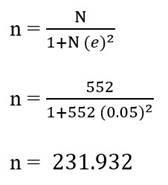
Where :
n = Sample size
N = Population size
e = Confidence interval or error of sampling (5% or 0.05)
(Source: Yamane, 1967)
Despite this, a total of 226 responses were obtained successfully based on data gathered from questionnaires distributed online and by mail. Since there are more than 200 samples, it is considered an adequate sample size, according to Hoe (2008). In this study, the Partial Least Squares Structural Equation Modeling (PLS-SEM) method was used to explore and test new theories or models (Hair, Ringle, and Sarstedt, 2011; Hair, Risher, Sarstedt, and Ringle, 2019), specifically the mediating influence of board participation on the relationship between human capital and social capital towards co-operative performance.
5. Data Analysis
5.1. Descriptive analysis
The details of the demographic analysis of respondents are provided in Table 1. Of the 226 respondents in the survey, 76.5% were male, and 23.5% were female. Since Program Desa Lestari was primarily implemented among Bumiputera, the Malay respondents emerged in this survey as the largest ethnic group in the sample (83.8%) and Islam is the dominant religion among the respondents (94.0%). With respect to age distributions, there were six age classes where most of the respondents are between 51 and 60 years of age (31.1%), followed by those between 61 and 70 years of age with Mean=52.69. This outcome reveals that the co-operative board members are generally from the older generation. Meanwhile, the findings revealed that 42.5% of respondents had moderate academic qualification at with a range of 10 to 12 years of schooling (Mean=11.55). According to the position of the board, most of them (69.9%) were ordinary members of the board, other than those who held the positions of secretary, treasurer, or chairman. Besides that, 61.1% of those surveyed held the board position from 2 to 5 years with the longest term was 16 years involving 4 respondents.
Table. 1. Respondent’s demographic profile (N=226).
|
Variable |
ƒ |
Mean |
% |
|
Gender Male Female |
173 53 |
|
76.5 23.5 |
|
Age (years)
31 – 40 41 – 50 51 – 60 61 – 70
|
9 35 44 73 54 11 |
52.69 |
3.8 14.9 20.0 31.1 25.5 4.7 |
|
Religion Islam Christianity |
213 13 |
|
94.0 6.0 |
|
Ethnicity Malay Others |
191 3 |
|
83.8 16.2 |
|
Number of Years of Schooling to Reach the Highest Level of Education
7 – 9 10 – 12 13 – 15 16 – 18
|
23 27 96 67 12 1 |
11.55 |
10.2 11.9 42.5 29.6 5.3 0.4 |


|
Position Chairman Secretary Treasurer Ordinary Co-operative Board Members |
28 22 18 158 |
|
12.4 9.7 8.0 69.9 |
|
Duration of Holding the Board position in Current Co-operative 2 – 5 6 – 10 11 – 15
|
18 138 54 12 4 |
4.66 |
8.0 61.1 23.9 5.3 1.8 |


Note: ƒ = Frequency; % = Percentage
Source: Own elaboration
Furthermore, according to the co-operative profile analysis presented in Table 2, 38 (76%) of the 50 accessible co-operative population in Program Desa Lestari participated in this research. However, the remaining board members of 12 co-operatives did not reply to the request to participate in this study. Most respondents in this research came from co-operatives that joined Program Desa Lestari in 2013 (ƒ=18;47.4 percent), which corresponds to the sample size ratio based on years of implementation, which is 50 percent. According to the By-Laws, most co-operatives (ƒ=17;47.7%) were registered under the function of services, followed by agriculture (ƒ=12;31.6%), consumer (ƒ=5;13.2%), industrial (ƒ=2;5.26%) and one (2.6%) co-operative that registered under transport and construction, respectively.
Table. 2. Co-operative’s profile by functions (N=38).
|
Function of the co-operative |
Year of implementation |
ƒ |
Total |
% |
|
Services |
2013 |
9 |
17 |
47.7 |
|
2014 |
3 |
|||
|
2015 |
5 |
|||
|
Agriculture |
2013 |
5 |
12 |
31.6 |
|
2014 |
4 |
|||
|
2015 |
3 |
|||
|
Consumer |
2013 |
4 |
5 |
13.2 |
|
2014 |
1 |
|||
|
Industrial |
2013 |
1 |
2 |
5.26 |
|
2015 |
1 |
|||
|
Transport |
2013 |
1 |
1 |
2.6 |
|
Construction |
2015 |
1 |
1 |
2.6 |
Note: ƒ = Frequency; % = Percentage
Source: Own elaboration
5.2. Testing the measurement model
The reflectively evaluated variables in the present research comprise independent variables (human capital and social capital) and a mediating variable (board involvement), whereas a dependent variable (co-operative performance) was formatively examined. Since this research included both reflective and formative measures, the evaluation began with the reflective measures, which were assessed using both convergent and discriminant validity analyses. The extracted factor loadings, composite reliability (CR), and average variance extracted (AVE) were required to assess convergent validity. Following an examination of the outer loadings for all latent variables, 14 items were excluded from the research model due to unsatisfied loading values that were less than the suggested value of 0.7 given by Hair et al. (2010). Meanwhile, the composite reliability values (refer Table 3), which indicated the degree to which the items indicated the latent construct, varied from 0.908 to 0.968, above the 0.70 threshold value recommended by previous scholars (Bagozzi and Yi, 1988; Hair, Hult, Ringle, and Sarstedt, 2017; Hair, Risher, Sarstedt, and Ringle, 2019). Furthermore, the average variance extracted was between 0.587 to 0.653, which surpassed Hair, Hollingsworth, Randolph, and Chong's (2017) suggested threshold of 0.5.
Table. 3. Factor loadings and reliability.
|
Construct |
Items |
Scale type |
Loadings/ weightsa |
AVEb |
CRb |
VIFb |
|
Human Capital |
My appointment as co-operative board members is based on my experience (HC3) |
Reflective |
0.74 |
0.908 |
0.587 |
NA |
|
My level of experience allows me to perform the role of a co-operative board member (HC4) |
0.82 |
|||||
|
My understanding of co-operative’s activities, structures and business helps me to perform the task of a co-operative board member more effectively (HC5) |
0.77 |
|||||
|
My ability as a co-operative board member depends on the knowledge gained from my self-employment experience (HC6) |
0.71 |
|||||
|
My previous experience as a co-operative board member facilitated me to understand the activities, structure and shape of the co-operative business (HC7) |
0.74 |
|||||
|
Management knowledge that I gained from work experience or experience as a member of the management committee of the village (e.g., MPKK / Homestay Association) enables me to organize and administer the co-operative effectively (HC8) |
0.81 |
|||||
|
Management skills that I acquired through work experience or experience joining the village-level committee (e.g., MPKK / Homestay Association enabled me to perform my task as a board) (HC9) |
0.71 |
|||||
|
Social Capital |
I spend time establishing ties with external parties that benefit my co-operative (SC10) |
Reflective |
0.88 |
0.941 |
0.639 |
NA |
|
I use external ties actively for the benefit of the co-operative (SC11) |
0.87 |
|||||
|
I execute the instructions and guidance from Government officers (SC12) |
0.74 |
|||||
|
I am acquainted with members of other co-operatives to exchange information (SC3) |
0.71 |
|||||
|
I have participated in co-operative activities with board members of other co-operatives (SC4) |
0.75 |
|||||
|
I frequently communicate with members of other co-operatives under Program Desa Lestari (SC5) |
0.79 |
|||||
|
I refer to board members of other co-operatives that have successfully implemented projects under Program Desa Lestari (SC6) |
0.75 |
|||||
|
I have the ability to establish ties with Government officials, customers and suppliers (SC7) |
0.86 |
|||||
|
I have good relationships with several Government officials, customers and suppliers (SC9) |
0.82 |
|||||
|
Board Participation |
I have participated in identifying potential projects that would benefit the community (BP1) |
Reflective |
0.78 |
0.968 |
0.653 |
NA |
|
I have participated in giving opinions during the project implementation (BP10) |
0.80 |
|||||
|
I have participated in coordinating the project implementation (BP11) |
0.85 |
|||||
|
I have participated in coordinating the co-operative’s assets (BP12) |
0.84 |
|||||
|
I have participated in monitoring the procurement process based on the procedure set by the Government (BP14) |
0.81 |
|||||
|
I have participated in evaluating whether the completed projects have achieved the set objectives (BP16) |
0.83 |
|||||
|
I have participated in evaluating the effectiveness of projects by reporting the outcomes to the Monitoring Committee at the Zone level (BP17) |
0.76 |
|||||
|
I have participated in evaluating the effectiveness of Program Desa Lestari based on the number of jobs created the increase in the co-operative’s income and the membership of household heads in the co-operative (BP18) |
0.79 |
|||||
|
I have participated in giving ideas/opinions/ suggestions in the project planning process (BP2) |
0.78 |
|||||
|
I have participated in the preparation of project proposals (BP3) |
0.780 |
|||||
|
I have participated in identifying the resources used for the projects (BP4) |
0.867 |
|||||
|
I have participated in identifying the issues/problems pertaining to project planning (BP5) |
0.890 |
|||||
|
I have participated in planning the action plan together with Government and non-Government organisations (BP6) |
0.787 |
|||||
|
I have participated in the project implementation (BP7) |
0.802 |
|||||
|
I have participated in collaborations with external agencies in the project implementation (BP8) |
0.763 |
|||||
|
I have participated and cooperated with the board members in achieving the objectives set by the co-operative (BP9) |
0.793 |
|||||
|
Co-operative performance |
Financial |
Formative |
0.726 |
NA |
NA |
1.11 |
|
Non-financial |
0.497 |
|
|
1.11 |
a for reflective scales, the standardised loading is provided; for formative scales, the weight of the linear combination is given.
b AVE = Average Variance Extracted, CR = Composite reliability, VIF = variance inflation factor, NA = Not applicable
Items HC1-HC2, HC10, SC1-SC2, SC8, SC13-SC18, BP13 and BP15 were deleted.
Source: Own elaboration
The discriminant validity was then examined. It was tested using the heterotrait-monotrait (HTMT) ratio, which Franke and Sarstedt (2018) suggest is a better way to demonstrate discriminant validity. According to Franke and Sarstedt, the HTMT ratio is verified if the values of all variables in the study are less than the 0.85 threshold suggested by Kline (2011). As indicated in Table 4, the validity of the discriminant was established since all HTMT values were less than the threshold values. As a result, the reflective measurement model demonstrated sufficient convergent and discriminant validity.
Table. 4. HTMT result.
|
|
Board participation |
Human capital |
Social capital |
|
Board participation |
|
|
|
|
Human capital |
0.704 |
|
|
|
Social capital |
0.741 |
0.629 |
|
Note: HTMT values for all constructs are lower than threshold value of HTMT.85
Source: Own elaboration
Multicollinearity occurs, according to Huck (2016), when two or more independent variables are too highly correlated to one another. Hair, Ringle, and Sarstedt (2011), based on the rule of thumb in the context of PLS-SEM, reported that a tolerance value of 0.20 or less and a VIF value of 5 and higher respectively indicate a potential collinearity problem. The findings in Table 2 showed that in this analysis, the tolerance and the VIF values were far from the cut-off threshold values indicating all independent variables were free from the multicollinearity problem. The results are eventually able to be further tested by the proposed statistical analysis (refer Table 5).
Table. 5. Assessment of Multicollinearity
|
Variables |
Collinearity Statistics |
|
|
Tolerance |
VIF |
|
|
HC |
0.463 |
2.158 |
|
SC |
0.351 |
2.851 |
|
BP |
0.365 |
2.739 |
|
Note: VIF = Variance Inflation Factor; HC = Human capital; SC = Social capital; BP = Board participation Source: Own elaboration |
||
Besides that, the current researcher regarded multicollinearity amongst indicators to be an essential issue in evaluating formative measures. Thus, the variance inflation factor (VIF) was examined to test for multicollinearity, and previous studies suggested that the VIF value should not be higher than 5 (Hair et al., 2011). As depicted in Table 4, the VIF values of the co-operative performance construct (Financial = 1.11 and NonFinancial =1.11) are substantially lower than the threshold value of 5. As a result of this findings, it is possible to conclude that collinearity does not reach a critical level in the formative constructs of the current study. This finding supports the significance of these measures, which is consistent with prior research (Abdul Aris, Madah Marzuki, Othman, Abdul Rahman, and Hj Ismail, 2018; Beaubien and Rixon, 2012; Bond, 2009).
5.3. Testing the structural model
Table 6 show the results of testing the structural model. This study found that board’s human capital and social capital do not contribute to co-operative performance at r-value > 0.05. The coefficient of determination score (R2) was then assessed to examine the model's predictive accuracy. According to the results, the study model explained 12.4% of the variances in co-operative performance that were explained by human capital and social capital. Since the R2 value is higher than 0.10, the amount of variance in the endogenous construct explained by all of the exogenous constructs in this research is deemed adequate, as suggested by Falk and Miller (1992).
Table. 6. Summary of the structural model.
|
Hyp. |
Description |
Path coefficient |
Standard error |
t-Value |
Results |
|
H1 |
Human capital -> Co-operative Performance |
-0.401 |
0.359 |
1.116 |
Not supported |
|
H2 |
Social capital -> Co-operative Performance |
0.248 |
0.191 |
1.299 |
Not supported |
Note: Insignificant at r-value > 0.05
Source: Own elaboration
The outcome of this findings, as a result, denied the rule of thumb of mediating effect, where the prerequisite is that there should be a significant relationship between the independent variable and the dependent variable prior to assessing the mediating effect (Baron and Kenny, 1986; Shadish and Sweeney, 1991). However, some researchers criticised Baron and Kenny's "causal method," discovering that when assessing for mediation, the direct impact does not have to be significant (Hayes, 2009; Preacher and Hayes, 2004, 2008; Shrout and Bolger, 2002; Zhao, Lynch Jr, and Chen, 2010).Thus, for the indirect impact analysis, this study adopted the bootstrapping technique introduced by Preacher and Hayes (2008) which has been accepted as one of the most comprehensive and effective approaches for measuring the mediation effect (Hayes, 2009; Shrout and Bolger, 2002; Zhao, Lynch Jr, and Chen, 2010). The results of the mediating analysis are shown in Table 7.
Table. 7. Result of mediation analysis.
|
Hyp. |
Description |
Path coefficient |
Standard error |
t-Value |
Results |
|
H3 |
Human capital -> Board participation -> Co-operative Performance |
-0.026 |
0.0.42 |
0.622 |
Not supported |
|
H4 |
Social capital -> Board participation -> Co-operative Performance |
-0.035 |
0.056 |
0.616 |
Not supported |
Source: Own elaboration
6. Discussion of findings
The purpose of this research is to examine at the role of board members in providing resources to the cooperative that affect its performance. Based on the analysis, the findings indicated that the relationship between human capital and co-operative performance is not significant, thus H1 was not supported. This result is inconsistent with previous studies which found a significant influence of human capital on the co-operative performance (Bontis, Ciambotti, Palazzi, and Sgro, 2018; Hafizah Hammad Ahmad Khan et al., 2016; Mondal and Ghosh, 2012).
According to the resource dependence perspective, one of the significant factors influencing board members' roles in providing resources is specific human capital resulting from industry-specific experience. In this study, the length of service as a board member is reflected as the board's industry-specific experience in related businesses, where, according to Pérez-Calero et al., (2016), the length of service in the boardroom is an important factor in the development of board members' management skills. Most respondents (61.1%) in this study had only been on the board for an average of almost 5 years, suggesting a lack of management experience among them and is likely to be contributing to this finding.
Furthermore, general human capital derived from organised schooling and formal education, which, according to Carpenter & Westphal (2001), would lead to enhanced cognitive skills among board members. However, according to the current study, most respondents (42.5%) had a moderate level of education, with an average year of schooling of 11.55 years. It is expected to influence board members' ability to process information, perform diverse roles, and discover new approaches (Birchall and Simmons, 2004; Forbes & Milliken, 1999; Hillman and Dalziel, 2003; Wincent et al., 2009), thereby affecting the board's productivity (Dahlqvist et al., 2000), which may contribute to the current study's findings.
In addition, as indicated in Table 3, most board members were over the age of 50, which may have contributed to the current study's findings. This phenomenon may have occurred due to the limited availability of younger generation to fill in the board with required competencies, especially in developing countries (Gugler, Mueller, and Burcin Yurtoglu, 2003; Reed, 2002; Wijethilake, Ekanayake, and Perera, 2015). These problems lead to the selection of a member who does not contribute to the effectiveness of board members, which eventually impacts the co-operative's performance.
As for the second hypothesis, this research discovered that there is no significant relationship between social capital and co-operative performance in Program Desa Lestari, thus H2 was not supported. This conclusion contradicts the findings of Tony Liston Hutagalung (2016), Hafizah Hammad Ahmad Khan et al. (2016) and Yaacob, Hammad Ahmad Khan Zuraini Yaacob, and Hussin (2014). This finding may be attributed to the strong bonding among the board members of Program Desa Lestari, which, according to Woolcock (2002), is common in rural areas. The disadvantage of a high level of bonding is that it discourages creativity and innovation, particularly among new members of the board. It is supported by Golovina, Hess, Nilsson, and Wolz (2014), who observed that the presence of a high level of social capital within an institution could have the effect of reducing individual expression, innovation, and advancement (Adhikari and Goldey, 2010;Woolcock, 1998), which would have an impact on organisational performance.
Furthermore, Woolcock and Narayan (2000) observed that the closed nature of individual social groups has a negative effect on external social capital, which, according to Abdallah, Bressers, and Clancy (2015), is an important advantage for an organisation, particularly those that rely heavily on external social capital. Since the co-operative was used in this community development programme, it is much more essential to enhance the co-operative's external networking to ensure that the community benefits from Program Desa Lestari initiatives. Thus, bridging social capital between the co-operative and other co-operative comrades (Yu & Nilsson, 2018) is one strategy of fostering interdependence among social groups, allowing them to share and exchange information, ideas, and innovation, as well as better recognise new opportunities (Adler and Kwon, 2002; Claridge, 2018), particularly in community-related projects.
Besides that, the present result is believed to be influenced by a lack of linkage with other inter-organizational networks. Linking social capital entails social ties with those in authority such as government agencies, suppliers, and customers that can be used to gain access to resources or power (Stone and Hughes, 2002). According to Flora (1998), bonding social capital alone may not be sufficient for co-operatives to succeed as a mechanism in community development programmes without linking social capital. Thus, board members should develop this “vertical” connection (Claridge, 2018) in order to get help or support such as financial aids, specialised training programmes, technical and marketing assistance.
Additionally, board participation was proposed as a mediating factor in the relationship between human capital, social capital, and co-operative performance. However, based on the results, the construct of board participation is unlikely to mediate the relationships, and therefore the H3 and H4 were not supported. This is most likely due to the composition of the co-operative board members. In contrast to board members of an investor-owned company, the present study's sample comprised board members of co-operatives who were not subject to internal or external pressure and were chosen on a voluntary basis (Chareonwongsak, 2017; Leviten-Reid and Campbell, 2016). As a consequence, the nomination and selection of board members is not meticulous and, in some circumstances, board members are appointed from members of another organisation (Hakelius, 2018) and may have impacted their commitment to carry out responsibilities (Chareonwongsak, 2017).
Apart from that, as mentioned, most respondents (42.5%) in this research had a moderate level of education, which is expected to affect board members' capacity to execute their strategic tasks effectively. This is because, according to Barroso-Castro et al. (2017), the board with the necessary know-how affects board members' skills and strategic participation, whether passive or active (Wheelen, Hunger, Hoffman, and Bamford, 2004), which is likely to have contributed to the current finding.
7. Conclusion
Despite the fact that these constructs do not contribute to co-operative performance, this study makes several contributions. The exploration and introduction of the factors from the resource dependence and participation perspective of co-operative board members acts as pioneer research and provides a new dimension in reviewing board-related factors that have not been widely explored, thus contributing to the body of knowledge, particularly in the Malaysian co-operative sector.
In general, these preliminary findings add to the practical implications that stakeholders can consider. The findings serve as a guide for the Ministry of Rural Development in reinforcing the use of co-operatives as a catalyst for Malaysia's community development programme in terms of economic enrichment. Even though the results indicated that co-operative performance was moderate, it shows and signals that the use of co-operative in Program Desa Lestari has potential and should be continued as a vehicle for this programme. Additionally, it is recommended that the training provider, such as Malaysia Co-operative Societies Commission (MCSC) and Malaysian Cooperative College (MCC), provide additional training and courses to equip the board with necessary knowledge and skills, which will lead to better outcomes, particularly for the micro cluster co-operative.
Owing to the limitations, the current study only gathered analytical results from a single point of view, that of the co-operative board members in Program Desa Lestari. Although the results were insignificant, the model developed in this study may be relevant to co-operatives in different clusters or regions where the outcomes may vary.
8. References
Aini, Y. M., Hafizah, H. A. K., & Zuraini, Y. (2012) Factors Affecting Cooperatives’ Performance in Relation to Strategic Planning and Members’ Participation. Procedia - Social and Behavioral Sciences, 65, pp. 100–105. https://doi.org/10.1016/j.sbspro.2012.11.098.
Abdallah, S., Bressers, H., & Clancy, J. (2015) Potential electricity co-operatives in Kenya: Could social capital be a barrier? Community Development Journal, 50(2), pp. 213–228. https://doi.org/10.1093/cdj/bsu029.
Abolfazl Rahmatizadeh, Hossein Barani, Ahmad Abedi Sarvestani, & Amir Mozafar Amini. (2016) Investigating Factors Affecting the Success of Official and Unofficial Range Management Cooperatives in Three Provinces of Iran. Journal of Rangeland Science, 6(2), pp. 144–155.
Abu Samah, A., & Fariborz, A. (2011) The Theoretical and Conceptual Framework and Application of Community Empowerment and Participation in Processes of Community Development in Malaysia. Journal of American Science, 7(2), pp. 186–195. R
Adhikari, K. P., & Goldey, P. (2010) Social Capital and its “Downside”: The Impact on Sustainability of Induced Community-Based Organizations in Nepal. World Development, 38(2), pp. 184–194. https://doi.org/10.1016/j.worlddev.2009.10.012.
Adler, P. S., & Kwon, S.-W. (2002) Social Capital: Prospects for a New Concept. Academy of Management Review.
Allahyari, T., Hassanzadeh, R. N., Khosravi, Y., & Zayeri, F. (2011) Development and evaluation of a new questionnaire for rating of cognitive failures at work. International Journal of Occupational Hygiene.
Azadi, H., Hosseininia, G., Zarafshani, K., Heydari, A., & Witlox, F. (2010) Factors influencing the success of animal husbandry cooperatives: A case study in Southwest Iran. Journal of Agriculture and Rural Development in the Tropics and Subtropics, 111(2), pp. 89–99.
Babbie, E. (2011) The Basics of Social Research (5th ed.). CA, USA, Cengage Learning.
Bagozzi, R. P., & Yi, Y. (1988) On the Evaluation of Structural Equation Models. Journal of the Academy of Marketing Science, 16(1), pp. 74–94.
Bailey, E. E., & Helfat, C. E. (2003) External Management Succession, Human Capital, and Firm Performance: An Integrative Analysis. Managerial and Decision Economics, 24(4), pp. 347–369. https://doi.org/10.1002/mde.1119.
Baron, R. M., & Kenny, D. A. (1986) The Moderator-Mediator Variable Distinction in Social Psychological Research: Conceptual, Strategic, and Statistical Considerations. Journal of Personality and Social Psychology, 51(6), pp. 1173–1182. https://doi.org/10.1037/0022-3514.51.6.1173.
Barroso-Castro, C., Villegas-Periñan, M. del M., & Casillas-Bueno, J. C. (2016) How boards’ internal and external social capital interact to affect firm performance. Strategic Organization, 14(1), pp. 6–31. https://doi.org/10.1177/1476127015604799.
Barroso-Castro, C., Villegas-Periñan, M. M., & Dominguez, M. (2017) Board members’ Contribution to Strategy: The Mediating Role of Board Internal Processes. European Research on Management and Business Economics, 23(2), pp. 82–89. https://doi.org/10.1016/j.iedeen.2017.01.002.
Beaubien, L., & Rixon, D. (2012) Key Performance Indicators in Co-operatives : Directions and Principles. Journal of Co-Operative Studies, 45 (2), pp. 5–15.
Becker, G. S. (1964) Human Capital. Columbia University Press: New York
Becker, G. S. (1975) Human capital: a theoretical and empirical analysis. New York: National Bureau of Economic Research.
Becker, G. S. (1993) Chicago Unbound The Economic Way of Looking at Life. Economic Sciences, (12), pp. 38–58.
Benos, T., Kalogeras, N., Wetzels, M., de Ruyter, K., & Pennings, J. M. E. (2018) Harnessing a “currency matrix” for performance measurement in cooperatives: A multi-phased study. Sustainability (Switzerland), 10(12), pp. 1–38. https://doi.org/10.3390/su10124536.
Bhattacherjee, A. (2012) Social science research: Principles, methods, and practices. Global Text Project.
Birchall, J., & Simmons, R. (2004) What motivates members to participate in co-operative and mutual businesses? Annals of Public and Cooperative Economics, 75(3), pp. 465–495. https://doi.org/10.1111/j.1467-8292.2004.00259.x.
Bontis, N., Ciambotti, M., Palazzi, F., & Sgro, F. (2018) Intellectual capital and financial performance in social cooperative enterprises. Journal of Intellectual Capital.
Borzaga, C., Depedri, S., & Tortia, E. (2011) Organisational Variety in Market Economies and the Role of Co-operative and Social Enterprises: A Plea for Economic Pluralism. Journal of Co-Operative Studies, 44(1), pp. 19–30.
Brown, L. H. (1997) Organizations for the 21st Century? Co-operatives and “New” Forms of Organization. Canadian Journal of Sociology/Cahiers Canadiens de Sociologie, 65–93.
Bruderl, J., Preisendorfer, P., & Ziegler, R. (1992) Survival Chances of Newly Founded Business Organizations. American Sociological Review, 57(2), 227. https://doi.org/10.2307/2096207.
Buang, M.; Abu Samah, A. (2020) Systematic review of factors influencing the effectiveness of the co-operative board. REVESCO. Revista de Estudios Cooperativos, vol. 136, e71855. https://dx.doi.org/10.5209/reve.71855.
Burt, R. S. (1980) Cooptive corporate actor networks: A reconsideration of interlocking directorates involving American manufacturing. Administrative Science Quarterly, pp. 557–582.
Carpenter, M. A., & Westphal, J. D. (2001) The strategic context of external network ties: Examining the impact of director appointments on board involvement in strategic decision making. Academy of Management Journal.
Certo, S. T. (2003) Influencing initial public offering investors with prestige: Signaling with board structures. Academy of Management Review, 28(3), pp. 432–446. https://doi.org/10.5465/AMR.2003.10196754.
Chaddad, F. R. (2006) Performance Measurement of User-Owned Organizations: An Evaluative Survey of the Literature. In EnANPAD, pp. 1–16.
Chareonwongsak, K. (2017) Enhancing board motivation for competitive performance of Thailand’s co-operatives. Journal of Co-Operative Organization and Management, 5(1), pp. 1–13. https://doi.org/10.1016/j.jcom.2017.01.001.
Chen, H. L. (2014) Board capital, CEO power and R&D investment in electronics firms. Corporate Governance: An International Review, 22(5). https://doi.org/10.1111/corg.12076.
Cheuk, S. (2012) The co-operative rating system and the internal management factors influencing the performance of co- operatives in Sabah, Malaysia: An exploratory study. Malaysian Accounting Review, 11(2), pp. 69–94.
Chi, T. (1994) Trading in strategic resources: Necessary conditions, transaction cost problems, and choice of exchange structure. Strategic Management Journal, 15(4), pp. 271–290. https://doi.org/10.1002/smj.4250150403.
Claridge, T. (2018) Functions of social capital–bonding, bridging, linking. Social Capital Research.
Coff, R. W. (1997) Human Assets and Management Dilemmas: Coping with Hazards on the Road to Resource-Based Theory. The Academy of Management Review, 22(2), 374. https://doi.org/10.2307/259327.
Cohen, J. M, Uphoff, N. T. (1977) Rural Development: Concept and Measures for Project Design, Implementation, and Evaluation. Rural Development Committee, Cornell University, (2).
Cohen, J., & Uphoff, N. (1980) Participation ’ s place in rural development : Seeking clarity through specificity. World Development, 8, pp. 213–235.
Coleman, J. S. (1990) Foundations of social theory. Cambridge, MA: Belknap Press of Harvard University Press.
Colombo, M. G., & Grilli, L. (2005) Founders’ human capital and the growth of new technology-based firms: A competence-based view. Research Policy, 34(6), pp. 795–816. https://doi.org/10.1016/j.respol.2005.03.010.
Cooper, A. C., Gimeno-Gascon, F. J., & Woo, C. Y. (1994) Initial human and financial capital as predictors of new venture performance. Journal of Business Venturing, 9(5), pp. 371–395. https://doi.org/10.1016/0883-9026(94)90013-2.
Cornforth, C. (2004) The Governance of cooperatives and mutual associations: A paradox perspective. Annals of Public and Cooperative Economics, 75(1), pp. 11–32. https://doi.org/10.1111/j.1467-8292.2004.00241.x.
Creswell, J. W. (2012) Educational Research: Planning, Conducting, and Evaluating Quantitative and Qualitative Research (4th ed., Vol. 4). Boston: Pearson. https://doi.org/10.1017/CBO9781107415324.004.
Crook, T. R., Todd, S. Y., Combs, J. G., Woehr, D. J., & Ketchen, D. J. (2011) Does human capital matter? a meta-analysis of the relationship between human capital and firm performance. Journal of Applied Psychology, 96(3), pp. 443–456. https://doi.org/10.1037/a0022147.
Dahlqvist, J., Davidsson, P., Dahlqvist, J., & Wiklund, J. (2000) Initial Conditions as Predictors of New Venture Performance: A Replication and Extension of the Cooper et al. study. Enterprise and Innovation Management Studis, 1(1), pp. 1–17.
Daily, C. M., Dalton, D. R., & Cannella, A. A. (2003) Corporate Governance: Decades of Dialogue and Data. Academy of Management Review, 28(3), pp. 371–382. https://doi.org/10.5465/amr.2003.10196703.
Dalton, D. R., Daily, C. M., Ellstrand, A. E., & Johnson, J. L. (1998) Meta-analytic reviews of board composition, leadership structure, and financial performance. Strategic Management Journal, 19(3), pp. 269–290. https://doi.org/10.1002/(sici)1097-0266(199803)19:3<269::aid-smj950>3.0.co;2-k.
Dalziel, T., Gentry, R. J., & Bowerman, M. (2011) An Integrated Agency-Resource Dependence View of the Influence of Directors’ Human and Relational Capital on Firms’ R&D Spending. Journal of Management Studies, 48(6), pp. 1217–1242. https://doi.org/10.1111/j.1467-6486.2010.01003.x.
Davis, L. L. (1992) Instrument review: Getting the most from a panel of experts. Applied Nursing Research, 5(4), pp. 194–197.
Duguid, F. (2017) Non-Financial Tools and Indicators for Measuring the Impact of Co-operatives. Journal of Co-Operative Accounting and Reporting, 5(1), pp. 40–54.
Falk, R. F., & Miller, N. B. (1992) A primer for soft modeling. University of Akron Press.
Fiegener, M. K. (2005) Determinants of board participation in the strategic decisions of small corporations. Entrepreneurship: Theory and Practice, 29(5), pp. 627–650. https://doi.org/10.1111/j.1540-6520.2005.00101.x.
Finkelstein, S., & Mooney, A. C. (2003) Not the usual suspects: How to use board process to make boards better. Academy of Management Perspectives, 17(2), pp. 101–113. https://doi.org/10.5465/ame.2003.10025204.
Flora, J. L. (1998) Social Capital and Communities of Place. Rural Sociology, 63(4), pp. 481–506.
Forbes, D. P., & Milliken, F. J. (1999) Cognition and corporate governance: Understanding board of directors as strategic decision-making groups. Academy of Management Review, 24(3), pp. 489–505. https://doi.org/10.5465/AMR.1999.2202133.
Franke, G., & Sarstedt, M. (2018) Heuristics versus statistics in discriminant validity testing: a comparison of four procedures. Internet Research.
Franken, J. R. V, & Cook, M. L. (2015) Informing Measurement of Cooperative Performance. In Interfirm networks, pp. 209–226. Springer.
Fredette, C., & Bradshaw, P. (2012) Social capital and nonprofit governance effectiveness. Nonprofit Management and Leadership, 22(4), pp. 391–409. https://doi.org/10.1002/nml.21037.
Gathmann, C., & Schönberg, U. (2007) How General Is Human Capital? A Task‐Based Approach. Journal of Labor Economics, 28(1), pp. 1–49. https://doi.org/10.1086/649786.
Giacomini, D., Chiaf, E., & Mazzoleni, M. B. (2017) How to Measure Performance in Cooperatives?: A Multiple Case Study. In Handbook of Research on Managerial Solutions in Non-Profit Organizations. pp. 346–365. Hershey, PA: IGI Global.
Golovina, S., Hess, S., Nilsson, J., & Wolz, A. (2014) Social capital in Russian agricultural production co-operatives. Post-Communist Economies, 26(4), pp. 522–536.
Goo, J., Kishore, R., Rao, H. R., & Nam, K. (2009) The role of service level agreements in relational management of information technology outsourcing: an empirical study. MIS Quarterly, pp. 119–145.
Granovetter, M. S. (1973) The Strength of Weak Ties. The American Journal of Sociology, 78(6), pp. 1360–1380.
Gugler, K., Mueller, D. C., & Burcin Yurtoglu, B. (2003) The impact of corporate governance on investment returns in developed and developing countries. The Economic Journal, 113(491), F511–F539.
Hafizah Hammad Ahmad Khan, Mahazril’ Aini Yaacob, Hussin Abdullah, & Siti Hajar Abu Bakar Ah. (2016) Factors affecting performance of co-operatives in Malaysia. International Journal of Productivity and Performance Management, 65(5), pp. 641–671.
Hair, J. F., Black, W. C., Babin, B. J., Anderson, R. E., & Tatham, R. L. (2010) Multivariate Data Analysis: A Global Perspective. Upper Saddle River, NJ: Pearson.
Hair, J. F., Hult, G. T. M., Ringle, C., & Sarstedt, M. (2017) A primer on partial least squares structural equation modeling (PLS-SEM) (2nd ed.). Sage publications.
Hair, J. F., Ringle, C. M., & Sarstedt, M. (2011) PLS-SEM: Indeed a silver bullet. Journal of Marketing Theory and Practice, 19(2), pp. 139–151. https://doi.org/10.2753/MTP1069-6679190202.
Hair, J. F., Risher, J. J., Sarstedt, M., & Ringle, C. M. (2019) When to use and how to report the results of PLS-SEM. European Business Review, 31(1), pp.2–24.
Hair, J., Hollingsworth, C. L., Randolph, A. B., & Chong, A. Y. L. (2017) An updated and expanded assessment of PLS-SEM in information systems research. Industrial Management & Data Systems.
Hakelius, K. (2018) Understanding the board of Swedish farmer cooperatives – Cases focusing on board composition and interaction patterns. Journal of Co-Operative Organization and Management, 6(2), pp. 45–52. https://doi.org/10.1016/j.jcom.2018.06.001.
Hayami, Y. (2009) Social capital, human capital and the community mechanism: Toward a conceptual framework for economists. Journal of Development Studies, 45(1), pp. 96–123. https://doi.org/10.1080/00220380802468595.
Hayes, A. F. (2009) Beyond Baron and Kenny: Statistical mediation analysis in the new millennium. Communication Monographs, 76(4), pp. 408–420.
Haynes, K. T., & Hillman, A. (2010) The Effect Of Board Capital And CEO Power On Strategic Change. Strategic Management Journal, 31(11), pp. 1145–1163. https://doi.org/10.1002/smj.859.
Hillman, A. J., Cannella, A. A., & Paetzold, R. L. (2000) The Resource Dependence Role of Corporate Directors: Strategic Adaptation of Board Composition in Response to Environmental Change. Journal of Management Studies, 37(2), pp. 235–256. https://doi.org/10.1111/1467-6486.00179.
Hillman, A. J., & Dalziel, T. (2003) Boards of directors and firm performance: Integrating agency and resource dependence perspectives. Academy of Management Review, 28(3), pp. 383–396. https://doi.org/10.5465/AMR.2003.10196729.
Hillman, A. J., Keim, G. D., & Luce, R. A. (2001) Board Composition and Stakeholder Performance: Do Stakeholder Directors Make a Difference? Business & Society, 40(3), pp. 295–314. https://doi.org/10.1177/000765030104000304.
Hind, A. M. (1999) Cooperative Performance–Is There a Dilemma? Journal of Cooperatives, pp. 30–43.
Hoe, S. L. (2008) Issues and Procedure in Adopting Structural Equation Modeling Technique. Journal of Applied Quantitative Methods, 3(1), pp. 76–83.
Huat, L. S. (2010) Relationship Between Human Capital And Firm Performance : A Study of Telecom Equipment Companies. Universiti Sains Malaysia.
Huck, S. W. (2016) Reading Statistics and Research. Pearson (6th ed.). Boston. https://doi.org/10.1093/acprof:oso/9780199757398.003.0004.
Huse, M., Hoskisson, R., Zattoni, A., & Viganò, R. (2011) New perspectives on board research: Changing the research agenda. Journal of Management and Governance, 15(1), pp. 5–28. https://doi.org/10.1007/s10997-009-9122-9.
Johnson, J. L., Daily, C. M., & Ellstrand, A. E. (1996) Boards of directors: A review and research agenda. Journal of Management, 22(3), pp. 409–438. https://doi.org/10.1016/s0149-2063(96)90031-8.
Johnson, S. G., Schnatterly, K., & Hill, A. D. (2013) Board Composition Beyond Independence: Social Capital, Human Capital, and Demographics. Journal of Management. https://doi.org/10.1177/0149206312463938.
Judge, W. Q., & Zeithaml, C. P. (1992, October) Institutional and strategic choice perspectives on board involvement in the strategic decision process. Academy of Management Journal. Academy of Management.
Keeling Bond, J. (2009) Cooperative Financial Performance and Board of Director Characteristics : A Quantitative Investigation. Journal of Cooperatives, 22, pp. 20–35.
Khanna, P., Jones, C. D., & Boivie, S. (2014) Director Human Capital, Information Processing Demands, and Board Effectiveness. Journal of Management, 40(2), pp. 557–585. https://doi.org/10.1177/0149206313515523.
Kim, N., & Kim, E. (2015). Board capital and exploration: from a resource provisional perspective. Management Decision, 53(9), pp. 2156–2174. https://doi.org/10.1108/MD-11-2014-0648.
Kim, Y. (2005) Board Network Characteristics and Firm Performance in Korea. Corporate Governance: An International Review, 13(6), pp. 800–808. https://doi.org/10.1111/j.1467-8683.2005.00471.x.
Kim, Y., & Cannella, A. A. (2007) Social capital among corporate upper echelons and its impacts on executive promotion in Korea. Journal of World Business, 43(1), pp. 85–96. https://doi.org/10.1016/j.jwb.2007.10.009.
Kim, Y., & Cannella, A. A. (2008) Toward a social capital theory of director selection. Corporate Governance: An International Review, 16(4), pp. 282–293. https://doi.org/10.1111/j.1467-8683.2008.00693.x.
Kline, R. B. (2011) Principles and Practice of Structural Equation Modeling. The Guilford Press.
Kor, Y. Y., & Sundaramurthy, C. (2009) Experience-based human capital and social capital of outside directors. Journal of Management, 35(4), pp. 981–1006. https://doi.org/10.1177/0149206308321551.
Kyazze, L. M., Nkote, I. N., & Wakaisuka-Isingoma, J. (2017) Cooperative governance and social performance of cooperative societies. Cogent Business and Management, 4(1), 1284391. https://doi.org/10.1080/23311975.2017.1284391.
Kyriakopoulos, K., Meulenberg, M., & Nilsson, J. (2004) The impact of cooperative structure and firm culture on market orientation and performance. Agribusiness, 20(4), pp. 379–396. https://doi.org/10.1002/agr.20021.
Lawshe, C. H. (1975) A Quantitative Approach to Content Validity. Personnel Psychology, 28(4), pp. 563–575. https://doi.org/10.1111/j.1744-6570.1975.tb01393.x.
Leana, C. R., & Pil, F. K. (2006) Social Capital and Organizational Performance: Evidence from Urban Public Schools. Organization Science, 17(3), pp. 353–366. https://doi.org/10.1287/orsc.1060.0191.
Lee, J.-H., Choi, C., & Kim, J. M. (2012) Outside Directors’ Social Capital and Firm Performance: A Complex Network Approach. Social Behavior and Personality, 40(8), pp. 1319–1331. https://doi.org/10.2224/sbp.2012.40.8.1319.
Lee, J.-H., Jang, Mi., & Choi, C. (2016) Social Capital of Corporate Boards: Effects on Firm Growth. Social Behavior & Personality, 44(3), pp. 453–462.
Lester, R. H., Hillman, A., Zardkoohi, A., & Cannella, A. A. (2008) Former Government Officials As Outside Directors: The Role Of Human And Social Capital. Academy of Management Journal, 51(5), pp. 999-1–13.
Leviten-Reid, C., & Campbell, R. (2016) Volunteer roles and the benefits of volunteering: An examination of nonprofit housing cooperatives. Community Development, 47(4), pp. 464–480. https://doi.org/10.1080/15575330.2015.1134609.
Liang, Q., Huang, Z., Lu, H., & Wang, X. (2015) Social Capital , Member Participation , and Cooperative Performance : Evidence from China ’ s Zhejiang. International Food and Agribusiness Management Review, 18(1), pp. 49–78.
Littlepage, G., Robison, W., & Reddington, K. (1997) Effects of task experience and group experience on group performance, member ability, and recognition of expertise. Organizational Behavior and Human Decision Processes, 69(2), pp. 133–147.
Lynn, M. R. (1986) Determination and quantification of content validity. Nursing Research.
Majee, W., & Hoyt, A. (2011) Cooperatives and Community Development: A Perspective on the Use of Cooperatives in Development. Journal of Community Practice, 19(1), pp. 48–61. https://doi.org/10.1080/10705422.2011.550260.
Malhotra, N. K. (2013) Basic Marketing Research: Pearson New International Edition: Leeds University Business School. Pearson Higher Ed.
Marie, A. A., Ibrahim, M. E., & Al Nasser, A. D. (2014) Effects of Financial and Non-financial Performance Measures on Customers’ Perceptions of Service Quality at Islamic Banks in UAE. International Journal of Economics and Finance, 6(10). https://doi.org/10.5539/ijef.v6n10p201.
Mayo, E. (2011) Co‐operative performance. Sustainability Accounting, Management and Policy Journal, 2(1), pp. 158–164. https://doi.org/10.1108/20408021111162182.
Melkumov, D., & Khoreva, V. (2015) The effect of board capital and conflict on the tasks of the board of directors. International Studies of Management and Organization, 45(1), pp. 60–79. https://doi.org/10.1080/00208825.2015.1005998.
Minichilli, A., & Hansen, C. (2007) The board advisory tasks in small firms and the event of crises. Journal of Management & Governance, 11(1), pp. 5–22. https://doi.org/10.1007/s10997-007-9014-9.
Mondal, A., & Ghosh, S. K. (2012) Intellectual capital and financial performance of Indian banks. Journal of Intellectual Capital.
Nahapiet, J., & Ghoshal, S. (1998) Social Capital, Intellectual Capital, and the Organizational Advantage. Academy of Management Review, 23(2), pp. 242–266. https://doi.org/10.2307/259373.
Naviaux, R. K., & McGowan, K. A. (2000) Social capital: Implications for Development Theory, Research, and Policy. World Bank Research Observer, 15(2), pp. 225–249. https://doi.org/10.1093/wbro/15.2.225.
Ng, T. W. H., & Feldman, D. C. (2010) The effects of organizational embeddedness on development of social capital and human capital. Journal of Applied Psychology, 95(4), 696.
Nicholson, G. J. (2004) A Framework For Diagnosing Board Effectiveness. Corporate Governance: An International Review, 12(4), pp. 442–460.
Nikkhah, H. A., & Redzuan, M. (2009) Participation as a Medium of Empowerment in Community Development. European Journal of Social Sciences, 11(1), pp. 170–176.
Nooraslinda Abdul Aris, Marziana Madah Marzuki, Rohana Othman, Safawi Abdul Rahman, & Nor Ashikin Hj Ismai. (2015) Designing indicators for cooperative sustainability: the Malaysian perspective. Social Responsibility Journal. https://doi.org/10.1108/17471110810856857.
Pérez-Calero, L., Villegas, M. del M., & Barroso, C. (2016) A framework for board capital. Corporate Governance (Bingley), 16(3), pp. 452–475. https://doi.org/10.1108/CG-10-2015-0146.
Pfeffer, J., & Salancik, G. R. (1978) The External Control of Organizations: A Resource Dependence Perspective. Harper & Row.
Preacher, K. J., & Hayes, A. F. (2004) SPSS and SAS procedures for estimating indirect effects in simple mediation models. Behavior Research Methods, Instruments, & Computers, 36(4), pp. 717–731.
Preacher, K. J., & Hayes, A. F. (2008) Asymptotic and resampling strategies for assessing and comparing indirect effects in multiple mediator models. Behavior Research Methods, 40(3), pp. 879–891.
Prime Minister’s Department. (2013) Government Transformation Programme 2.0: Catalysing Transformation For A Brighter Future.
Pugliese, A., & Wenstop, P. Z. (2007) Board members’ contribution to strategic decision-making in small firms. Journal of Management & Governance, 11(4), pp. 383–404. https://doi.org/10.1007/s10997-007-9036-3.
Ramón-Llorens, M. C., García-Meca, E., & Pucheta-Martínez, M. C. (2018, August) The role of human and social board capital in driving CSR reporting. Long Range Planning. https://doi.org/10.1016/j.lrp.2018.08.001.
Rauch, A., & Rijsdijk, S. A. (2013) The Effects of General and Specific Human Capital on Long-Term Growth and Failure of Newly Founded Businesses. Entrepreneurship: Theory and Practice, 37(4), pp. 923–941. https://doi.org/10.1111/j.1540-6520.2011.00487.x.
Reeb, D. M., & Zhao, W. (2009) Director capital and corporate disclosure quality. Journal of Accounting and Public Policy, 32(4), pp. 191–212.
Reed, D. (2002) Corporate governance reforms in developing countries. Journal of Business Ethics, 37(3), pp. 223–247.
Rilwanu, A. (2014) Participation, Social Capital and Empowerment Among Members of Kankara Local Community Fadama User Groups in Katsina State, Nigeria. Universiti Putra Malaysia.
Robbins, S. P., and Coulter, M. K. (2005) Management. Upper Saddle River, NJ, USA, Pearson Prentice Hall..
Rubio, D. M., Berg-Weger, M., Tebb, S. S., Lee, E. S., & Rauch, S. (2003) Objectifying content validity: Conducting a content validity study in social work research. Social Work Research, 27(2), pp. 94–104.
Ruef, M., Aldrich, H. E., & Carter, N. M. (2003) The Structure of Founding Teams: Homophily, Strong Ties, and Isolation among U.S. Entrepreneurs. American Sociological Review, 68(2), 195. https://doi.org/10.2307/1519766.
Sato, Y. (2013) Social Capital. Sociopedia.Isa, pp. 174–180.
Saunders, M., Lewis, P., & Thornhill, A. (2019) Research Methods for Business Students (8th edition). Pearson Education.
Sekaran, U., & Bougie, R. (2016) Research methods for business: A skill building approach. John Wiley & Sons.
Shadish, W. R., & Sweeney, R. B. (1991) Mediators and moderators in meta-analysis: There’s a reason we don’t let dodo birds tell us which psychotherapies should have prizes. Journal of Consulting and Clinical Psychology, 59(6), 883.
Shamsuddin, Z., Ghafar Ismail, A., Mahmood, S., & Abdullah, F. (2017) Determinants of Agricultural Cooperative Performance Using Financial Ratio. International Journal of Business and Technopreneurship, 7(3), pp. 385–396.
Sheikh, M. J. (2015) Farmers’ Participation, Social Capital, and Benefits in Water Management in Sindh Province of Pakistan. Universiti Putra Malaysia.
Shrout, P. E., & Bolger, N. (2002) Mediation in experimental and nonexperimental studies: new procedures and recommendations. Psychological Methods, 7(4), 422.
Soboh, R., Lansink, A. O., Giesen, G., & van Dijk, G. (2009) Performance measurement of the agricultural marketing cooperatives: The gap between theory and practice. Review of Agricultural Economics. https://doi.org/10.1111/j.1467-9353.2009.01448.x.
Solange Charas. (2015) Improving corporate performance by enhancing team dynamics at the board level. International Journal of Disclosure and Governance, 12(2), pp. 107–131. https://doi.org/10.1057/jdg.2013.35.
Spear, R., Cornforth, C., & Aiken, M. (2009) The governance challenges of social enterprises: evidence from a UK empirical study. Annals of Public and Cooperative Economics, 80(2), pp. 247–273.
Stevenson, W. B., & Radin, R. F. (2009) Social capital and social influence on the board of directors. Journal of Management Studies, 46(1), pp. 16–44. https://doi.org/10.1111/j.1467-6486.2008.00800.x.
Stone, W., & Hughes, J. (2002) Empirical meaning and measurement validity. Australian Institute of Family StudiesJune.
Subramaniam, M., & Youndt, M. A. (2005) The influence of intellectual capital on the types of innovative capabilities. Academy of Management Journal, 48(3), pp. 450–463.
Sun, Y., Fang, Y., Lim, K. H., & Straub, D. (2012) User satisfaction with information technology service delivery: A social capital perspective. Information Systems Research, 23(4), pp. 1195–1211.
Suruhanjaya Koperasi Malaysia. Akta Koperasi 1993 (Fi) (2010).
Suruhanjaya Koperasi Malaysia. (2017) Top 100 C0-operatives in Malaysia. https://doi.org/10.16309/j.cnki.issn.1007-1776.2003.03.004.
Sushila Devi Rajaratnam, Noordin, N., Said, M. S. A., Juhan, R., & Hanif, F. M. (2010) Success Factors of Cooperatives In Malaysia: An Exploratory Investigation. Malaysian Journal of Co-Operative Management, 5(1), pp. 1–24.
Sushila Devi Rajaratnam, Nurizah Nordin, Mohd Shahron Anuar Said, Rafedah Juhan, & Farahaini Mohd Hanif. (2009) Factors Influencing Performance of Co-operatives in Malaysia: A Tentative Framework. Malaysian Journal of Co-Operative Management, 5, pp. 43–63.
Tanriverdi, H., Konana, P., & Ge, L. (2007) The choice of sourcing mechanisms for business processes. Information Systems Research, 18(3), pp. 280–299.
Tian, J., Haleblian, J., & Rajagopalan, N. (2011) The Effect of Board Human and Social Capital on Investor Reactions to New CEO Selection. Strategic Management Journal, 32(7), pp. 731–747.
Tojib, D., & Sugianto, L.-F. (2006) Content validity of instruments in IS research. Journal of Information Technology Theory and Application, 8(3), pp. 31–56.
Tony Liston Hutagalung. (2016) Effects of Social Capital on the Performance of a Church Based Cooperative In Pematangsiantar City, North Sumatra, Indonesia. University of the Philippines.
Unger, J. M., Rauch, A., Frese, M., & Rosenbusch, N. (2011) Human capital and entrepreneurial success: A meta-analytical review. Journal of Business Venturing, 26(3), pp. 341–358. https://doi.org/10.1016/j.jbusvent.2009.09.004.
Valentinov, V., & Iliopoulos, C. (2013) Economic theories of nonprofits and agricultural cooperatives compared: New perspectives for nonprofit scholars. Nonprofit and Voluntary Sector Quarterly, 42(1), pp. 109–126.
Vourvachaki, E., Slobodyan, S., & Jerbashian, V. (2015) Specific and General Human Capital in an Endogenous Growth Model. Eastern European Economics, 53(3), pp. 167–204.
Westphal, J. D. (1999) Collaboration in the Boardroom: Behavioral and Performance Consequences of CEO-Board Social Ties. Source: The Academy of Management Journal, 42(1), pp. 7–24.
Westphal, J. D., & Fredrickson, J. W. (2001) Who directs strategic change? Director experience, the selection of new CEOs, and change in corporate strategy. Strategic Management Journal, 22(12), pp. 1113–1137. https://doi.org/10.1002/smj.205.
Wheelen, T. L., Hunger, J. D., Hoffman, A. N., & Bamford, C. E. (2004) Strategic management and business policy (9th ed.). Upper Saddle River, NJ: Pearson Prentice Hall.
Wiersema, M. F., & Bantel, K. A. (1992) Top Management Team Demography and Corporate Strategic Change. Academy of Management Journal, 35(1), pp. 91–121.
Wijethilake, C., Ekanayake, A., & Perera, S. (2015) Board involvement in corporate performance: evidence from a developing country. Journal of Accounting in Emerging Economies, 5(3), pp. 250–268. https://doi.org/10.1108/jaee-12-2012-0050.
Wilkinson, P., & Quarter, J. (1996) Building a community-controlled economy: The Evangeline co-operative experience. University of Toronto Press.
Wincent, J., Anokhin, S., & Boter, H. (2009) Network board continuity and effectiveness of open innovation in Swedish strategic small-firm networks. R and D Management, 39(1), pp. 55–67. https://doi.org/10.1111/j.1467-9310.2008.00539.x.
Wincent, J., Anokhin, S., & Örtqvist, D. (2010) Does network board capital matter? A study of innovative performance in strategic SME networks. Journal of Business Research, 63(3), pp. 265–275. https://doi.org/10.1016/j.jbusres.2009.03.012.
Woolcock, G. (2002) Social Capital and Community Development: Fad, Friend or Foe. In Queensland Local Government Community Services Association Annual Conference. Rockhampton (Vol. 192).
Woolcock, M. (1998) Social Capital and Economic Development: Toward a Theoretical Synthesis and Policy Framework. Theory and Society, (27), pp. 151–208.
Yaacob, A., Hammad Ahmad Khan Zuraini Yaacob, H., & Hussin, Z. (2014) Modelling the Impact of Strategic Planning, Structural Capital, Relational Capital, Members’ Participation, Governance Practices and Human Capital Development on Cooperatives’ Performance. Journal of Business & Management, 2(2), pp. 249–256.
Yamane, T. (1967) Elementary Sampling Theory. New Jersey: Prentice-Hall.
Yu, L., & Nilsson, J. (2018) Social capital and the financing performance of farmer cooperatives in Fujian Province, China. Agribusiness, 34(4), pp. 847–864. https://doi.org/10.1002/agr.21560.
Zahra, S. A., & Pearce, J. A. (1989) Boards of Directors and Corporate Financial Performance: A Review and Integrative Model. Journal of Management, 15(2), pp. 291–334. https://doi.org/10.1177/014920638901500208.
Zamanzadeh, V., Ghahramanian, A., Rassouli, M., Abbaszadeh, A., Alavi-Majd, H., & Nikanfar, A.-R. (2015) Design and implementation content validity study: development of an instrument for measuring patient-centered communication. Journal of Caring Sciences, 4(2), 165.
Zeuli, K., Freshwater, D., Markley, D., & Barkley, D. (2004) Cooperatives in Rural Community Development: A New Framework for Analysis. Journal of Community Development Society, 35(2), pp. 17–35. https://doi.org/10.1080/15575330409490130.
Zeuli, K., & Radel, J. (2005) Cooperatives as a Community Development Strategy : Linking Theory and Practice. The Journal of Regional Analysis and Policy, 35(1), pp. 43–55.
Zhao, X., Lynch Jr, J. G., & Chen, Q. (2010) Reconsidering Baron and Kenny: Myths and truths about mediation analysis. Journal of Consumer Research, 37(2), pp. 197–206.
Zikmund, W. G., Carr, J. C., & Griffin, M. (2013) Business Research Methods. Cengage Learning.